




Cost pressures, qualitative increases, and tribological and size-limiting demands are just four of the factors that have clearly characterized the production of transmission components, especially in the last three years. In this process, the grinding and honing system plays a central role because it literally puts the finishing touches on the transmission component. Often, whether this finishing touch fulfills the requirements has already been decided in the grinding and honing conception.
Initial Situation and Objective
Whereas the design and optimizing has occurred through the user in the past, today this task is increasingly being given to the abrasive system manufacturer. Above all, this requires extensive know-how, from the customer-specific design of the grinding, honing, and dressing tools to the practical support through highly specialized applications engineers. This demand is completely fulfilled with the MIRA product line. It is a worldwide first: a unique and complete system for the hard machining of gears. With MIRA, Tyrolit is setting an important milestone in its future strategy as a system supplier.
Applications
Gear wheels for high-performance transmissions are hardened after the soft shaving, or soft milling, in order to achieve defined improvement of the tribological component characteristics. About 60 percent of the gear wheels later used in transmissions, and shafts with gear teeth, undergo hard finish machining after the hardening process. In this process the dimensional and shape deviations resulting from pre-machining are eliminated, and the desired geometrical tooth shape is produced. On the one hand, this can be achieved through continuous-generation grinding with multi-ribbed grinding tools (see Figure 1), or on the other hand through discontinuous single-rib profile grinding, according to the partial generating or forming method.

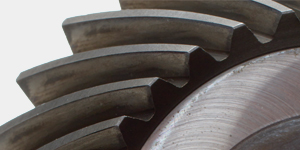
The honing of the gear flanks takes place after the grinding, corresponding to the profile requirement of the gear wheel quality. In the manual transmission of a top-of-the-line car, for example, up to 70 percent of the gear wheels undergo a honing process. Since, with grinding, a pronounced surface structure arises in the flank direction, which causes unacceptable acoustic excitation in operation, a finishing process is scheduled. In this process the machining tracks are arranged perpendicular to the tooth flank, meaning from top to root. Later, in transmissions, for every ground gear wheel, a honed gear wheel is meshed in. The favorable influence on the noise development resulting from this causes the automotive industry to have great faith in this method.
Innovation and Customer Benefits: Grinding
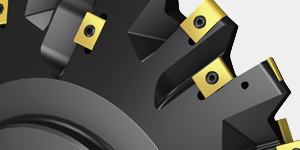
During generation grinding of gears in a large batch, the quality of the pre-dressing process of the multi-ribbed grinding tools has a great influence on the total degree of utilization of the machine and, consequently, on the entire cost situation. For this reason, this aspect was taken into consideration in the framework of the MIRA development. Modern machines for gear generation grinding are equipped with an integrated dressing unit in the machine area in order to, among other things, precisely dress the new multi-ribbed grinding tool by a wheel change, by means of special dressing wheel sets, directly in the machine
With a well pre-profiled, sintered aluminum oxide multi-ribbed grinding tool, the dressing effort can be reduced to approximately 10 dressing steps to every 0.02mm radial infeed, resulting in a total profiling time of about 15 minutes. Poorly pre-profiled tools have to be dressed more often, with the same radial infeed, in order to even out the faults. The most frequent causes of faults in this process are tumbling errors, and pitch and concentricity deviations. With poor pre-profiling, the total profiling time quickly adds up to about 100 minutes. Consequently, with the time saving though a correspondingly good pre-profiling–by a gear with z=23 and a floor time of 2.5 minutes, for example–as many as 30 more gear wheels can be ground.
In a series of tests, the pre-profiling, with regard to the required run-out tolerances such as parallelism run-out, concentricity, or profile geometry, was optimized.
For additional advantages during the major cycle time (increased stock removal, less dressing cycles, etc.), new sintered aluminum oxides were combined with a bond system specially adapted to the application conditions of the gear-flank machining. This allows for achieving new performance spectrums with regard to lifetime, profile holding, and avoiding burning.
Practical reports have revealed that Tyrolit’s MIRA multi-ribbed grinding tools are number one in gear production with benchmarking.
Innovation and Customer Benefits: Honing
The “honing,” or hard fine machining of gear flanks, has been carried out by means of resinoid bonded tools since the introduction of this special process. However, on account of the weak bonding in the grain determined by the system up to now, the dressing cycles and profile holding are limited. Especially with high stock to be removed, this leads to long honing times and low radial infeeds. The Tyrolit patented compound honing ring (see Figure 2) offers a clear improvement in this area.

With the compound ring, vitrified bonded conglomerates are embedded in a high-damping epoxy matrix, involving an extremely complex production process with several machining steps. As a result, the outstanding stock removal characteristics and material removal rates of the vitrified bonded grinding tool are combined with the damping characteristics of the epoxy matrix. The Tyrolit research team did an excellent job in this situation, because a totally new resinoid bond had to be developed for this application.
In comparison to conventional resinoid bonds, this new bond has an enormously high grain retention force (see Figure 3). Up to three times higher dressing cycles and outstanding dimensional accuracy and profile shape are achieved. Dressing cycles of up to 25 workpieces, with material removal rates up to 0.08mm per gear flank, which were inconceivable a few months ago, are now a reality. The mounting or clamping of these compound rings occurs in all machines–up to now with resinoid bonded honing rings–through the lateral area of contact of the honing ring.

New System for Performance Honing
Increasing international pressure is forcing machine manufacturers and users to reduce production steps. New methods have the substitution of soft shaving or gear grinding in the whole process as a goal. This is why, increasingly, the so-called performance honing process is installed directly after the hardening process through the application of new machine and tool concepts (see Figure 4).

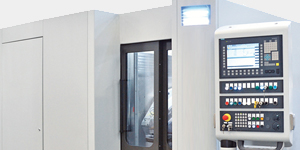
In close cooperation with the Präwema company of Eschwege, Germany, a new world innovation has been developed and is ready to go into production. This innovation was supported by the joint vision of Präwema and Tyrolit to use a 100-percent vitrified bonded honing tool for the performance honing of transmission gears. To achieve this goal, it was first necessary to optimize the machine parameters with the new requirements in mind. The machine rigidity, the coolant/ lubricant system, and also the mounting and clamping of the vitrified honing tool was designed with the machine concept of the Präwema SynchroFine type. The directly driven and digitally controlled spindles for the tool and workpiece are the actual core of the machine.
The accompanying vitrified bonded AI2-O3 honing ring, also a new development, was designed by Tyrolit with the new machine conditions in mind (see Figure 7). A new design was also necessary for the mounting of the vitrified honing ring which, differing from concepts used up until now, is radially clamped in an expanding chuck. Qualitatively high-grade diamond-dressing gear wheels are required for the profiling of the honing tools (see Figure 5). The design and production of these “master wheels” has to be exactly matched to the performance honing tool. On the basis of the available test results, it can be established that the material removal rate and the cutting capability with this type of performance honing far exceeds what, until now, was seen as being “average.” (See Figure 6)


Difficult profiles, hardening distortions, and stock to be removed up to 0.1mm per flank no longer constitute a problem with this new quality. As the following practical example clearly shows, the result is able to be realized in the shortest time, in contrast to resinoid bonded honing rings.
Until now, with relatively unfavorable pre-machining quality, seldom more than 20 to 25 workpieces per dressing cycle could be machined. With the new vitrified bonded honing tool dressing cycles, 80, 90 or more parts can be achieved with one dressing operation. Capacity increases and cost savings are to be stressed as the primary customer advantages.
Practical Example
A gear that is difficult to hone with a conventional machine, with the following data:
Number of teeth z = 24
Module m = 2.6
Pressure angle a = 16(infinity)
Helix angle b = 0(infinity)
Width B = 51 mm Pre-machining: milled, hardened
Can be process-stable in series finish honed with an optimal tool combination on a Präwema SynchroFine machine in about 65 seconds, with a stock removal of 70 to 80 microns and a dressing cycle of more than 80 parts.
Outlook
The development of the performance honing process is just at the beginning stages. In application sections, soft shaving or gear grinding is to be taken very seriously as a competitive process. At present, the dimension of the workpiece to be machined constitutes the decisive criteria for the selection of the machining process. With the continuous further development on the machine and tool side, performance honing with vitrified honing rings will certainly be one of the core production processes in gear machining.


