





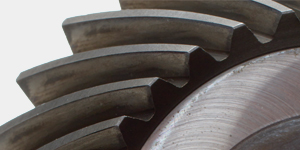

Reverse engineering — the deconstruction and analysis of an object for the purpose of constructing a copy or replacement of the original component when the original design or drawing is unavailable — is especially helpful in making repairs or in improving old designs. For example, let’s say you need to manufacture a replacement for a broken gear, but you don’t have the original drawing. This is not an uncommon situation. The question is, what is the best way to reverse engineer a gear when you have the part in front of you, but do not have the part drawing? Most people will choose to approach this problem by guessing, and oftentimes will not be successful in duplicating the gear. However, this does not have to be the case. Reverse engineering of a gear is a science. I have outlined the procedure below in five simple steps (calculations are made using Integrated Gear Software (TM)).
Step 1: Calculate the Normal Base Pitch
The normal base pitch is the distance on a normal base helix between corresponding involutes of adjacent teeth. To calculate, make two measurements using a span micrometer. If the first is over four teeth then the second has to be over five teeth. Trial and error shows that we can measure across five teeth without contacting the OD and four teeth without contacting the root. The difference between four- and five-teeth readings is the normal base pitch of the gear. Better accuracy will be obtained if a number of readings are taken at four and at five teeth and then averaged. In this example the normal base pitch works out to be 0.949 in.
Step 2: Measure the Outside Diameter of the Gear
Measure the outside diameter of the gear in inches using a set of calipers.
In addition to the above materials, and the possibility of passivating or surface coating, nitrogen alloy steels such as the SV30 steel X30CrMoN15-1 (similar to 1.4108) are now available for application in corrosive media or environments, which excel in the following properties:
Step 3: Measure the Root Diameter of the Gear
Measure the root diameter, measured across the bottoms of opposite tooth spaces. You can also measure the root fillet radius if you have a radius gage or another method.
Step 4: Calculate the Diametral Pitch
Do this by assuming the pressure angle, the angle between the tooth profile and a radial line at its pitch point (try 20 and 25 degrees as they are more commonly used). Typically the diametral pitch, the number of teeth per inch of pitch diameter, will be a whole number such as three, eight, 10, etc. The following example shows a sample calculation (note: different combinations of diametral pitch and pressure angle will yield the same normal base pitch). From the span measurement, we will calculate the normal tooth thickness at the reference pitch diameter.

The diametral pitch is 3.110781. Since it is not an integer number let us try a 25-degree pressure angle.

This time the diametral pitch comes out to be 3.000263. This can be rounded off to three. So, let us enter 3.00 as the diametral pitch and make another calculation, and calculate the normal base pitch. It comes out to be 0.9491 with normal tooth thickness calculated to be 0.6391.

The diametral pitch is 3.110781. Since it is not an integer number let us try a 25-degree pressure angle.
Step 5: Working with the Hob
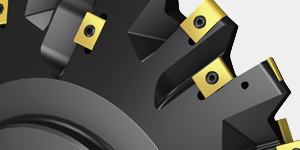
Work with the chosen hob to determine the geometry of the gear that the hob will produce. You need to have the hob drawing or a way to measure the hob cutting edge geometry. A minimum of two dimensions will be required from the hob drawing: tooth thickness, and; tip to reference dimension. Also note the tip radius.


Figure 6 shows the data for the gear which will be cut using the chosen hob mentioned above.
If the calculated root diameter is different from what was measured, input the measured root diameter and calculate the tip to reference line dimension for the hob.


To assure that you have accurately reverse engineered the gear, get a scaled plot of the gear tooth on a transparency paper. Compare that image with the image of the actual gear tooth seen on a shadow graph or other similar equipment. If the two match, great. If not, run the software again to get the required accuracy.
In the case of a helical gear you will need to measure the lead of the gear by using a lead checker or a more precise method of measurement, such as a computerized gear checker. All other steps for reverse engineering the gear will remain the same.
As I mentioned earlier, my objective is to lay out an easy to use procedure. If you found the article to be interesting, please contact me and let me know. Include other topics regarding the design and manufacturing of metal or plastic gears that interest you.


