




Friction and wear can be found in every moving object, from the cars we drive to the lifesaving devices used to keep our blood pumping. When the efficiencies of these machines fall short of their theoretical design, it falls upon coatings and surface treatments to make up the difference. In manufacturing they are used to save costs and produce a better product. In the automotive racing industry they are used to gain an edge over an opponent. One such emerging technology has been developed by Mikronite Technologies, Inc. Originally created as a means to polish aspherical lenses used in holography, it has since grown into the aerospace, tooling, medical, and automotive industries.


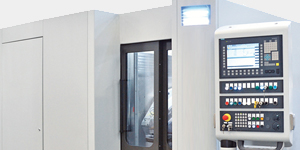
The Mikronite process is a high energy centrifugal system. Although it’s sometimes confused as a coating, it is not. Rather, the process “laps” the surface and enhances the properties of the material through mechanical action. Unlike conventional tumbling, where parts are rolled around in a chamber—and often against other parts—for long periods, this process is short and precise. Through the correct speed ratio, parts placed inside the vessels can be subjected to very high forces, upwards of 40g’s, without impacting the walls. The mechanics of the machine allow the part to be naturally suspended by rotating media and forced to oscillate within it.
The media within the vessel can vary depending on the goals, but it is commonly a combination of ground walnut shells and an abrasive such as silicon carbide or aluminum oxide—the same materials found in sandpaper. Because it is a dry process, there are no chemicals to dispose of, and the media can eventually be discarded as regular trash. The media is also non-reactive and does not chemically alter the surface of the part.
The process variables—time, speed, media, etc.—can be optimized to specific parts geometries, materials, and sizes. Because of the flexibility in these variables the process lends itself to nearly any material, from aluminum to cast iron, and it can be controlled to maintain part tolerances even in the most extreme applications.
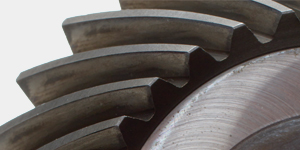
The combination of high forces, abrasive media, and oscillation results in a lapped surface with retained compressive stresses. This combination has proven highly successful with automotive ring and pinion gears. Vinci Hi-Performance, Inc., ran extensive dyno testing to put the Mikronite process to the test. In their first round they compared off-the-shelf gear sets with a 4:10 ratio to identical gears from the same manufacturer that were Mikronite enhanced. Each set of gears were run for 200 miles. On the first vehicle an increase of four rear wheel horsepower was observed, and six ft lbs of torque were recorded. The differential temperature was 27 degrees lower with the Mikronite processed gears. The second vehicle showed an increase in seven rear wheel horsepower and 8.6 ft lbs of torque.
Vinci’s second test compared 3:73 ratio gear sets that were Mikronited versus chemically finished and stock gears. In this case each gear set was run for 500 miles. For this ratio the Mikronite gear set had an increase of 13.7 rear wheel horsepower and 15 foot pounds of torque over the stock set. It also ran 24 degrees cooler. The chemically treated set had an increase of 4.9 rear wheel horsepower and 7.5 ft lbs torque increase over stock and ran five degrees cooler. Vinci’s dyno testing reveals several secondary benefits of the process. Since horsepower has been gained and temperature reduced, one can deduce that fuel efficiency would increase as well. Also, it was noted on the test reports that the noise and vibration from the gears decreased greatly as a result of the process.
These results only show half of the benefits of the process. A superfinished surface obviously reduces friction, resulting in temperature decrease and power gain. But there is also the life of the component to consider. Shot peening is the generally accepted method for improving fatigue life through compressive stress. It does so by preventing cracks at the surface, which can only initiate in tension. Gears certainly benefit from peening, but peening of the flanks can promote failure if they are not polished. The Mikronite process has the unique ability to impart compressive stress and uniformly lap the entire gear. A sample pinion gear tested for compressive stress showed a 70-percent increase in compressive stress over an unprocessed gear. The improvement was not just a surface effect but was seen to be effective to a depth of 0.015” in that instance. NHRA Pro Stock champion Warren Johnson began using the Mikronite process over a year ago. He has seen the life of a set of gears go from seven to 35 passes, with similar results on other gear sets. Northeast modified dirt-track driver Frank Cozze has also seen two to three times life gains from using the process.
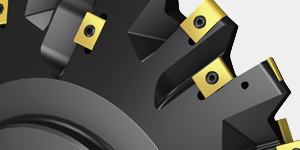
Even beyond processing the gears themselves, there is another way Mikronite can improve gear manufacturing, and that is by going to the source—processing the very cutting tools that make the gears. At Crane Cams, Inc., Mikronite processed gear hobs have shown four to eight times life. The same mechanisms that benefit the gear also act on the tooling. An optimized Mikronite process does not alter tooling sharpness or geometries. It works on a microscopic level to smooth the cutting surface. The improved cutting surface then creates a better part. Detroit manufacturers have seen two times the life out of processed cutting inserts. This reduces tooling costs, of course, but it also reduces the downtime required to change out tooling.
It has been shown to work before and after coatings have been applied. Coating surfaces often duplicate the surfaces on which they are applied, and they can also be susceptible to flaking or poor adhesion if there is a stress gradient across the surface to be coated. The result is a longer-lasting tool with improved performance.


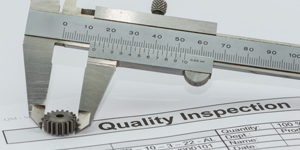
The Mikronite process provides a unique combination of superfinishing and strengthening. The results we have seen from the Mikroniting of gears and tooling is something every manufacturer should consider as a means to improve their product and reduce costs in their plants.


